
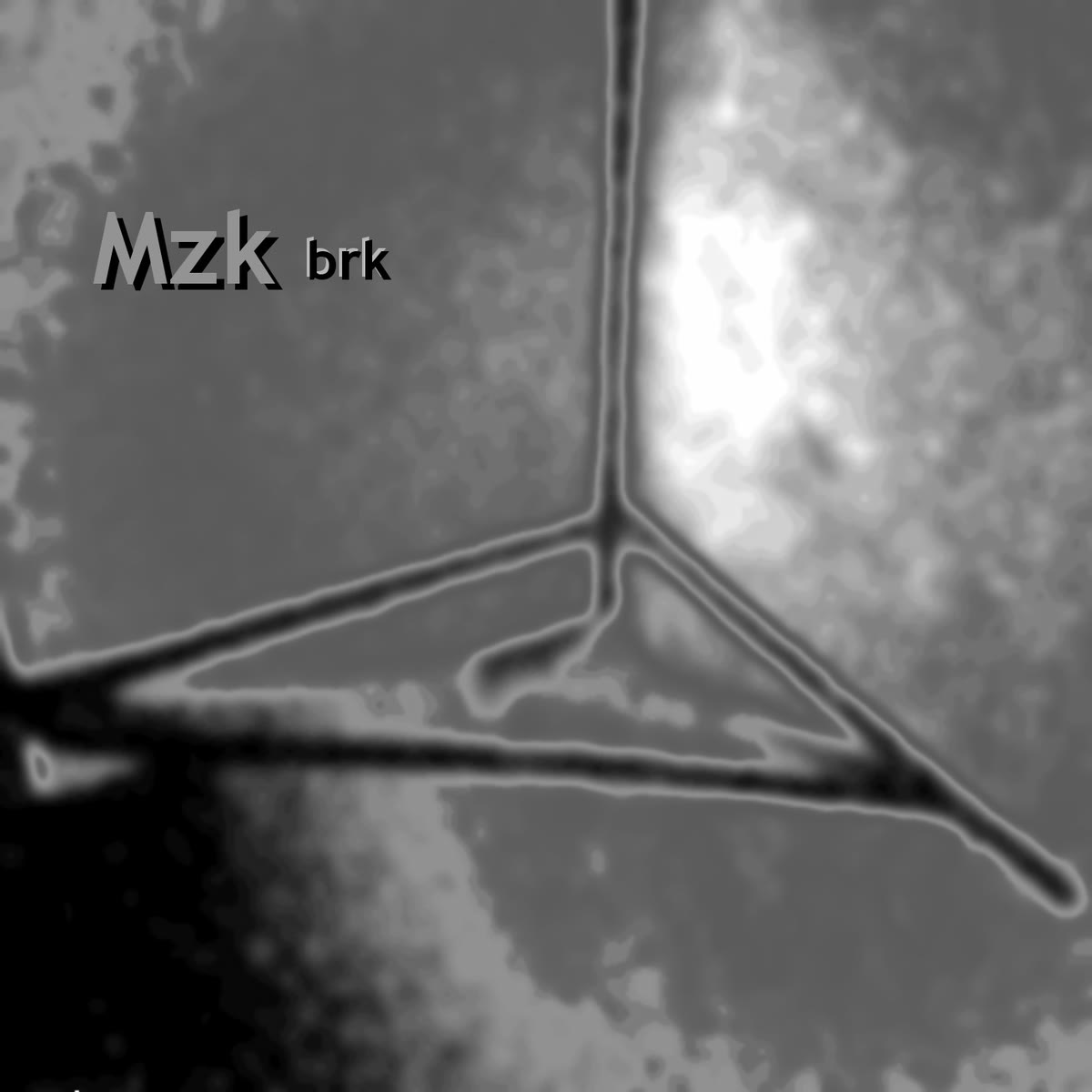

Brk
Five instrumental pieces from the first week of 2007, closing with nerpb — at nine and a half minutes, the longest thing Mzk had written to that point.
Recreated with AI as Ai-Brk.
- Described by AI from the audioA subdued A-minor instrumental combining synthesizer, electric-piano and plucked guitar-like tones. A moderate repeating pulse carries a restrained arrangement that grows almost imperceptibly across its middle, giving the piece a nocturnal, introspective character.
- Described by AI from the audioA compact B-minor electronic piece with a clear half-time/double-time relationship around 50 and 100 BPM. Synthesizer and electric-piano colors are joined by a plucked, guitar-like line, forming a steady, slightly mechanical groove that brightens briefly before its soft ending.
- Described by AI from the audioA brighter, faster keyboard-and-guitar instrumental with a C-centered tonal pull. Electric-piano, organ-like synthesizer and plucked-string timbres move in a lively repeating pattern, giving the track a nimble, almost playful energy despite its cool electronic production.
- Described by AI from the audioA measured D-minor keyboard instrumental built from piano, electric-piano and synthesizer layers. The rhythm suggests a slow 50 BPM pulse or a firmer 100 BPM double time, while the remarkably even dynamics make the piece feel controlled, circular and quietly tense.
- Described by AI from the audioA ten-minute D-minor electronic suite led by synthesizer and piano-like timbres, with occasional brass, string and percussion colors widening the palette. Its slow pulse and long repeating spans support a gradual middle-section expansion, followed by a restrained retreat rather than a dramatic climax.
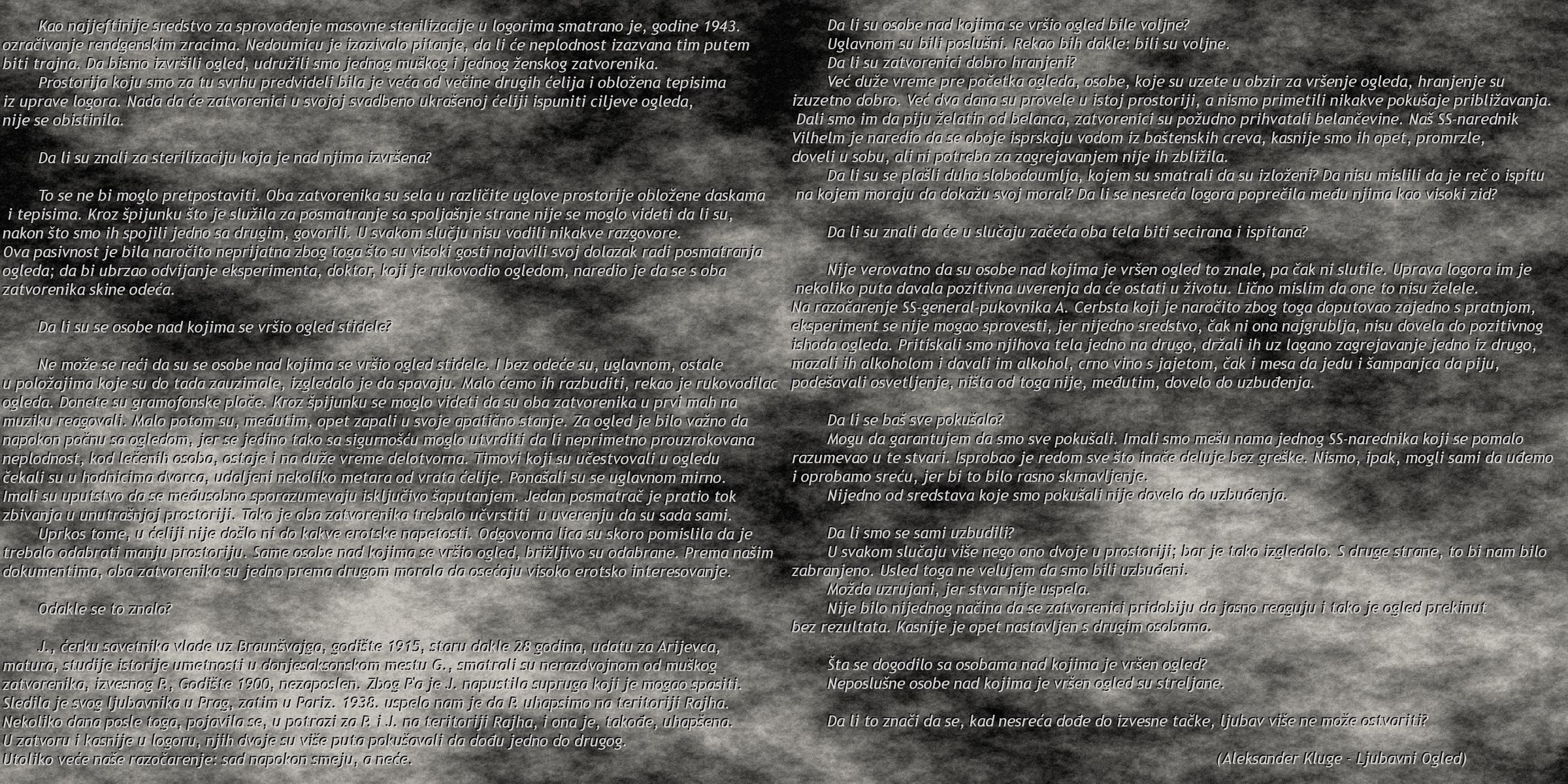
A love experiment
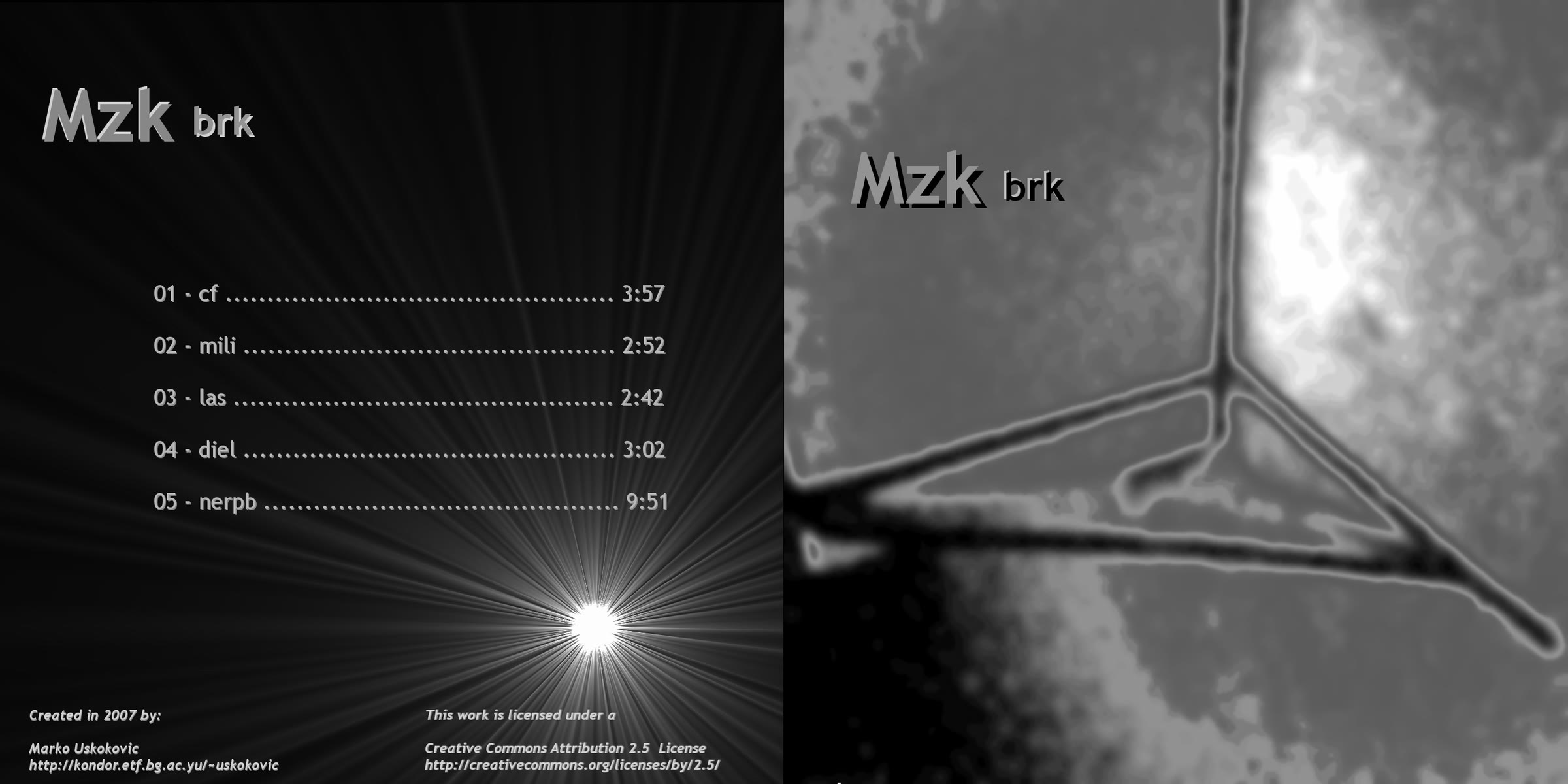
Brk's inlay carries nothing at all about the music. Both panels are given over to a Serbian translation of Alexander Kluge's “Ein Liebesversuch” — “Ljubavni ogled” — set in a faint italic across a field of grey smoke.
Kluge's story, from his 1962 debut collection Lebensläufe, reconstructs a real 1943 experiment at Auschwitz. Two prisoners — a man and a woman who had been lovers, arrested after years of trying to reach each other across occupied Europe — were sterilised by X-ray and then shut together in a furnished cell while the camp doctors watched through a spyhole to see whether the procedure had worked. It is written as a flat exchange of questions and answers with the men who ran it: were the subjects willing, were they well fed, were they ashamed. The horror sits in the bureaucratic calm of it — nothing is ever described, only administered. The experiment yielded nothing, and the text disposes of the two people in a single sentence. It ends by asking whether, past a certain depth of misfortune, love can be realised at all.
Set against five short instrumental pieces, it makes Brk by some distance the darkest object in this catalogue.